 admin
admin 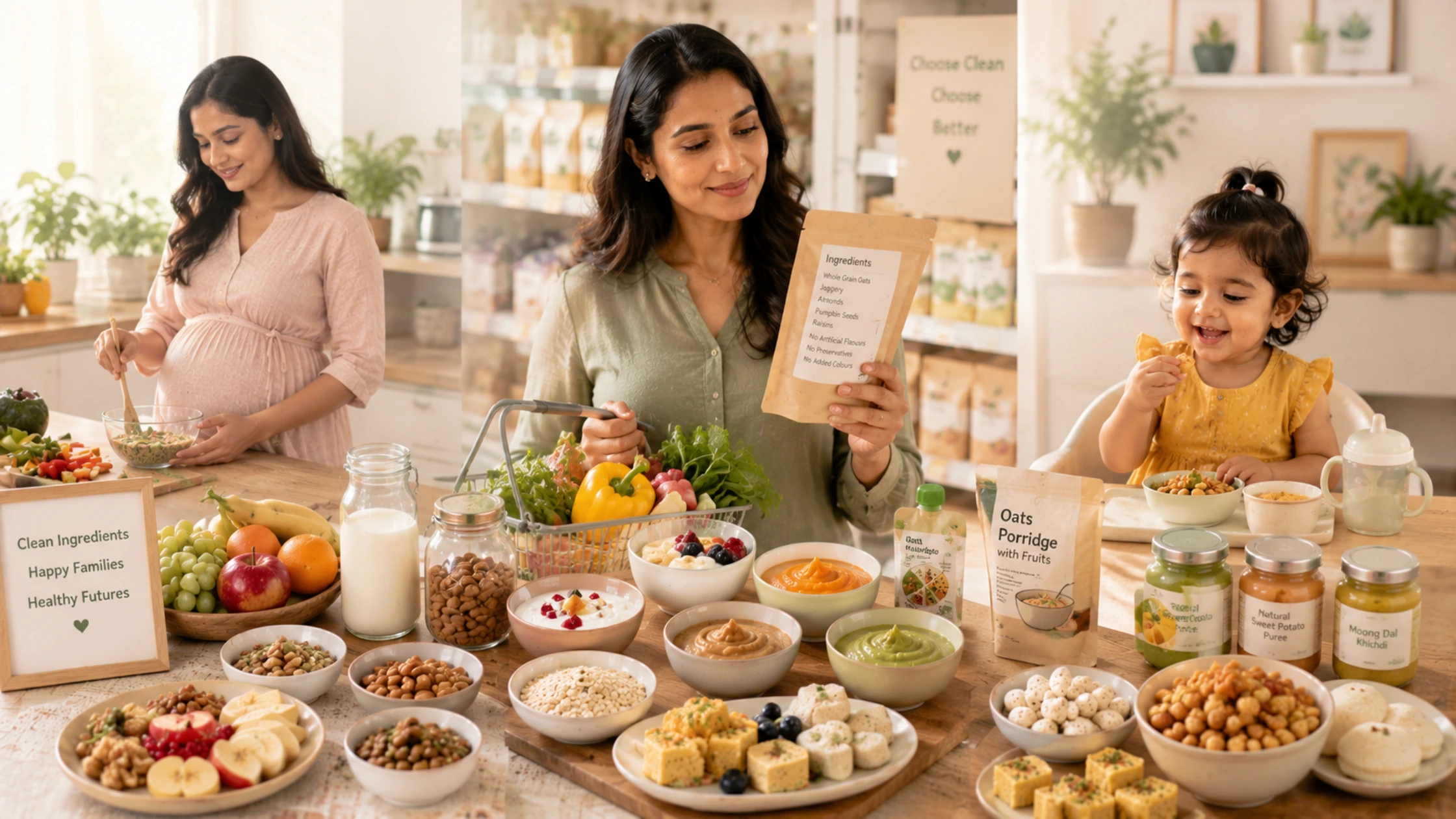
Walk through any supermarket aisle today and you will see products labeled natural, wholesome, preservative-free, organic, and family-friendly. For many parents, these claims can create confusion rather than clarity. Understanding clean label food, healthy packaged food, and preservative free snacks can help families make more informed nutrition decisions with confidence.
Parents today are increasingly looking for clean ingredient baby food, preservative free baby food, and healthy packaged foods for babies that align with their values around ingredient transparency, nutrition, and convenience. Whether shopping for a growing toddler, introducing first foods, or looking for healthy packaged snacks for pregnancy, knowing what food labels actually mean is an important step toward better decision-making.
For most families, the goal is not perfection. It is choosing foods that feel trustworthy, practical, and aligned with healthy family habits.
What Is Clean Label Food?
The term clean label food does not have a single universal regulatory definition. However, it is commonly used to describe foods that emphasize ingredient transparency and simplicity.
Quick Answer
Clean label food generally refers to products made with recognizable ingredients, transparent labeling, and formulations that are easy for consumers to understand.
Characteristics Often Associated with Clean Label Food
- Simple ingredient lists
- Transparent labeling
- Familiar ingredients
- Easy-to-understand product information
- Focus on ingredient quality
Parent Scenario
A mother comparing two snack products may choose the one with fewer and more recognizable ingredients because it feels easier to understand and evaluate. This preference is one reason why interest in clean label food continues to grow.
Clean Label Checklist
- Recognizable ingredients
- Transparent labeling
- Clear nutritional information
- Easy-to-understand product descriptions
- Appropriate for the intended age group
Why Modern Parents Care About Ingredients
Today’s parents have access to more information than ever before.
At the same time, the abundance of nutrition advice can create uncertainty.
Common Parent Concerns
- Hidden ingredients
- Long ingredient lists
- Excessive processing
- Feeding confidence
- Product transparency
- Convenience versus nutrition
Parents seeking healthy food for kids, baby nutrition, toddler nutrition, and overall family wellness often want greater visibility into what their children are eating.
Emotional Drivers Behind Ingredient Awareness
Parents are often looking for:
- Confidence
- Reassurance
- Simplicity
- Transparency
- Trust
Many families increasingly prioritize healthy snacks moms trust, trusted nutrition for children, and foods that align with long-term healthy eating goals.
Common Marketing Claims Explained
Food packaging often includes multiple marketing messages that can be difficult to interpret.
Marketing Claims vs Reality
| Marketing Claim | What It May Mean |
| Natural | May refer to ingredient sourcing or processing approach |
| Organic | Produced according to specific standards |
| Preservative-Free | No added preservatives in the product |
| Wholesome | General marketing description |
| Clean Label | Typically refers to ingredient simplicity and transparency |
Important Reminder
Marketing claims should be considered alongside:
- Ingredient lists
- Nutrition information
- Age suitability
- Overall food quality
Myth vs Fact
| Myth | Fact |
| Clean label always means healthier | Overall nutritional value still matters |
| Organic automatically means nutrient-rich | Nutrition depends on the complete product |
| Natural foods require no label reading | Labels remain important |
| Packaging claims tell the whole story | Ingredient lists provide additional context |
Understanding these distinctions can help parents feel more informed while shopping.
What Makes Food “Clean Label”?
While definitions vary, many consumers associate clean-label products with simplicity and transparency.
Features Parents Often Look For
- Short ingredient lists
- Familiar ingredients
- Transparent sourcing
- Clear nutritional information
- Age-appropriate formulations
Ingredient Transparency Example
| Easier to Understand | More Complex |
| Oats, fruit, nuts | Long lists with multiple additives |
| Clearly identified ingredients | Difficult-to-identify ingredients |
| Simple descriptions | Complex formulations |
Many families interested in healthy packaged food for kids, healthy packaged foods for babies, and healthy alternatives to processed snacks often use ingredient transparency as a practical decision-making tool.
Brands such as Tiny Tums reflect the growing preference for preservative-free nutrition, ingredient transparency, and parent reassurance in maternal and child nutrition.
Ingredients Parents Should Watch Closely
Understanding ingredient lists can help reduce uncertainty.
What Parents Should Review
- Ingredient order
- Product suitability
- Nutrition information
- Age recommendations
- Storage instructions
Green Flag vs Red Flag Examples
| Green Flags | Red Flags |
| Transparent ingredient list | Unclear ingredient descriptions |
| Nutritional information available | Limited nutritional details |
| Clear age guidance | No age-specific recommendations |
| Recognizable ingredients | Excessively complex ingredient lists |
Parent-Friendly Checklist
Read ingredient lists first
- Compare similar products
- Check nutrition information
- Look for age-appropriate options
- Prioritize transparency
Families seeking healthy snacks without preservatives India, snacks without preservatives for kids, and safe healthy snacks for toddlers often find that simple label-reading habits make shopping easier.
How to Read Food Labels Better
Reading labels does not need to be complicated.
What to Check First
- Ingredient list
- Nutrition panel
- Serving size
- Age suitability
- Storage guidance
Label Reading Table
| Section | Why It Matters |
| Ingredients | Understand what is inside the product |
| Nutrition Facts | Review nutritional value |
| Serving Information | Understand portions |
| Age Recommendations | Match developmental needs |
| Expiry Information | Support proper food use |
Practical Parent Scenario
A parent comparing two snack products for a preschool child may discover that one provides clearer nutritional information and simpler ingredients. This type of comparison often leads to more confident purchasing decisions.
Many families looking for healthy packaged snacks for school kids, healthy lunchbox snacks, and healthy snacks for school lunch use this approach regularly.
Clean Nutrition During Pregnancy and Early Childhood
Nutrition needs evolve from pregnancy through early childhood.
Why Ingredient Quality Matters Across Stages
Pregnancy:
- Focus on pregnancy nutrition
- Prioritize safe foods for pregnancy
- Support healthy eating during pregnancy
Infancy:
- Focus on healthy baby food
- Support baby nutrition
- Introduce foods gradually
Toddlerhood:
- Support toddler nutrition
- Encourage healthy eating habits for kids
- Build food variety
Life Stage Nutrition Table
| Stage | Nutrition Focus |
| Pregnancy | Balanced nutrition and variety |
| Infancy | Age-appropriate feeding |
| Toddlerhood | Food diversity and habits |
| Early Childhood | Long-term healthy eating patterns |
Many families interested in clean nutrition for pregnancy, pregnancy wellness nutrition, and maternal nutrition India also prioritize ingredient transparency throughout the family’s nutrition journey.
Tiny Tums is one example of a brand supporting preservative-free nutrition and parent confidence across multiple stages of childhood development.
Safer Everyday Food Choices for Families
Building healthy habits often starts with simple daily decisions.
Practical Food Choice Strategies
- Read ingredient lists
- Prioritize food variety
- Choose age-appropriate options
- Focus on consistency rather than perfection
- Encourage balanced eating habits
Better Everyday Choices Checklist
- Offer fruits and vegetables regularly
- Include nutrient-rich foods
- Encourage hydration
- Maintain structured meal and snack times
- Support positive eating habits
Healthy Snacks vs Junk Food
| Everyday Options | Occasional Options |
| Fruit | Highly sugary snacks |
| Yogurt | Sugar-loaded beverages |
| Whole grain foods | Excessively processed products |
| Nutrient-rich snacks | Foods with limited nutritional value |
Many parents searching for healthy alternatives to junk food for kids, healthy food habits for children, and healthy food ideas for children discover that simple habits often create the biggest long-term impact.
Brands such as Tiny Tums align with the growing demand for ingredient transparency, child wellness, and practical nutrition solutions that fit modern family lifestyles.
References
- Food Safety and Standards Authority of India (FSSAI)
https://www.fssai.gov.in - World Health Organization (WHO) – Healthy Diet
https://www.who.int/news-room/fact-sheets/detail/healthy-diet
FAQs
Clean label food generally refers to products that emphasize simple ingredients, transparent labeling, and information that is easy for consumers to understand.
Not necessarily. While clean label food often focuses on ingredient transparency, overall nutritional value remains important when evaluating any food product.
Parents may wish to review products with unnecessarily complex ingredient lists, limited nutritional value, or unclear labeling while prioritizing transparency and age-appropriate nutrition.
Many parents prefer clean ingredient baby food because simple and transparent ingredient lists can make feeding decisions easier to understand. However, nutritional quality and age suitability remain important considerations.